Newfoundland and labrador■
Background
BUT it must never be forgotten that it is a resource composed completely by volunteers. Great pains are taken to ensure personal contact with the members, through all correspondence, training sessions, phone calls, meetings, equipment issuances and office visits. Without this personal contact I do not feel that the CCGA would exist as it does today.
History
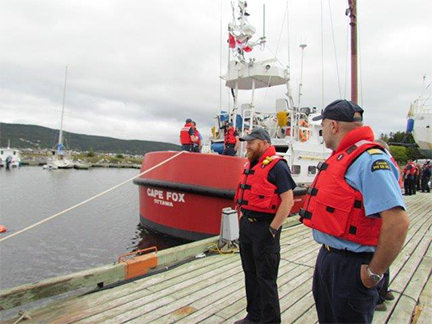
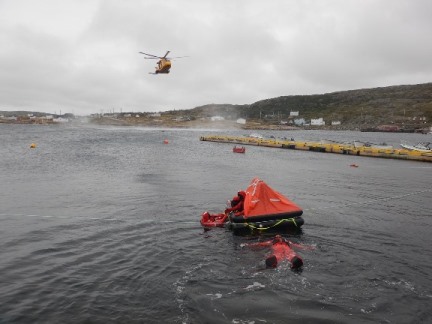
Canadian law, like that of most maritime nations, requires that vessels at sea respond to distress situations to the extent they can, without undue risk to their vessel or crew. However, many public minded Canadians in a position to do so, voluntarily go out of their way to assist fellow mariners in distress. It is this latter fact that led to the formation of the Canadian Coast Guard Auxiliary (CCGA). In the late 1970’s, it became evident that if some of these volunteer efforts could be coordinated to function as a part of Canada’s search and rescue system, more could be achieved by the same level of volunteer effort. As a result, the Canadian Coast Guard instigated the formation of the CCGA to provide a framework for this coordination.
Its members and their vessels respond to search and rescue incidents in the waters around Newfoundland Labrador and occasionally participate in SAR prevention activities around the province. The CCGA (NL) has a proud history. It was first incorporated on August 30, 1978. In its initial year of operation, 164 members and 65 vessels volunteered their services. They responded to 20 SAR incidents. Since incorporation the CCGA has grown and prospered in the Newfoundland Labrador Region. They now represent a significant resource for Search and Rescue. Ninety-two percent of the membership is involved in the fishery.
About
Regional Offices
Contact Us
878-C Topsail Road,
Mount Pearl
Mailing address
PO Box 938, St. John's,
NL A1C 5M3
1-800-563-6158
